The University of Regina has used video material featuring aboriginal people as a base for constructing teaching resources and we invite teachers to use these resources. We also encourage teachers to use this video material to construct their own lessons.
An introduction to the DIAMA/IsumaTV and the Inuit Culture Education was made to the principal and teachers of Ataguttaaluk
Elementary School and High School in Igloolik. Two classes at the Elementary school and two classes of the High School had the chance to use the Inuit
Culture Education website.
Kelly Quewezance is a member of the Keeseekoose First Nation
in Saskatchewan. He has a degree in Social Work from the University of Regina.
In the video clips he describes his role in distributing Treaty Annuity
Payments as the North Band Governance officer of Indian and Northern Affairs
Canada (INAC).
On a rainy evening in August 2009 Tim Haywahe from Carry the
Kettle First Nation in southern Saskatchewan led a group of Little Sisters
through a tipi raising on the grounds of the First Nations University of
Canada. During this process he talked to the girls about his traditional Nakota
way of raising the tipi.
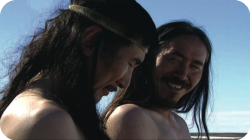
In June 2003, Cannes prize-winner Zacharias Kunuk's family gathered at their traditional home camp site of Siuraajuk, to share stories and honor the ancestors who came before them: a wedding; a burial; messages from the past.
Inuit memories and experiences of shamanism, and oral histories about the last shamans practicing in the region of Igloolik, Nunavut. Interviewees range from young people to elders and politicians, but they all share a belief that things happen, and that shamanism is still a living religion.
In Qimuksik (Dog Team)one family travels in the immense and beautiful arctic during spring. Inuaraq teaches his young son how to survive in the old way: driving the dogs, building the igloo, catching seals on the open water, running down caribou to feed the family.
Ajainaa! features Igloolik Elders discussing their views of contemporary Inuit life. Topics include the role of Inuit and "Southern" forms of education, survival strategies (such as how to save a drowning victim), and the differences between camp and settlement life. Written, produced, and performed by Isuma's Uqallangniq Elders Group.
Rapid change from traditional to modern life in Nunavut, like many post-colonial societies, has concentrated power, wealth and information in a few hands.… Leer más