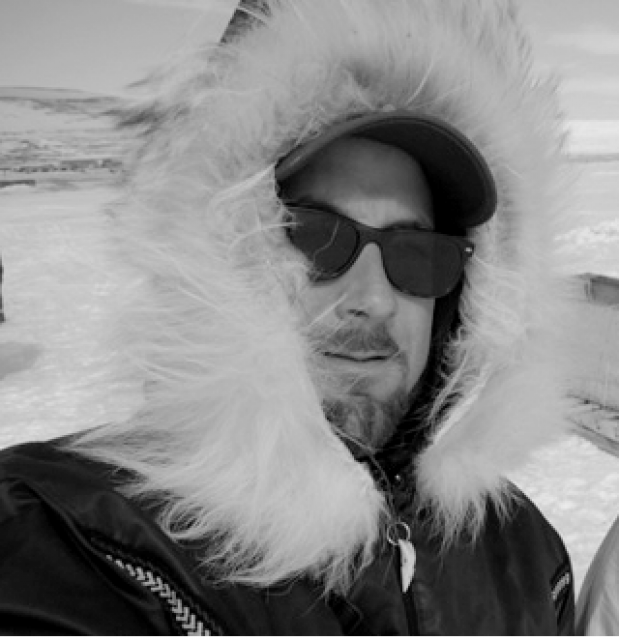
Dr. Ian Mauro is an Associate Professor in the Department of Geography at the University of Winnipeg. He holds a BSc in Environmental Science and PhD in Geography, from University of Manitoba, and was a SSHRC Postdoctoral fellow in Ethnoecology at the University of Victoria. He previously held a Canada Research Chair in Human Dimensions of Environmental Change at Mount Allison University.
As both a community-based researcher and filmmaker, Mauro works at the interface between the social and ecological sciences, and is a pioneer of multi-media methodologies, scholarship and education. He uses participatory video to collect, communicate and conserve local and indigenous knowledge, an approach that allows people who live on the land to tell their own stories, in their own language, and within the landscapes where their knowledge has been generated. He was awarded an “Apple Distinguished Educator” award for his approach in 2011.
His films - focused on genetically modified crops, sustainable agriculture and climate change - have been translated into numerous languages and screened globally at academic conferences, film festivals and venues such as the United Nations, Smithsonian Institution, National Geographic and the Royal Ontario Museum. He co-directed the influential Inuktitut language documentary Qapirangajuq: Inuit Knowledge and Climate Change (www.isuma.tv/ikcc) with acclaimed Inuk filmmaker Zacharias Kunuk and they continue to collaborate on a project focused on industrial development in the Canadian Arctic. Mauro’s most recent research documentary, Climate Change in Atlantic Canada (www.climatechangeatlantic.com), was toured across the region with Dr. David Suzuki.
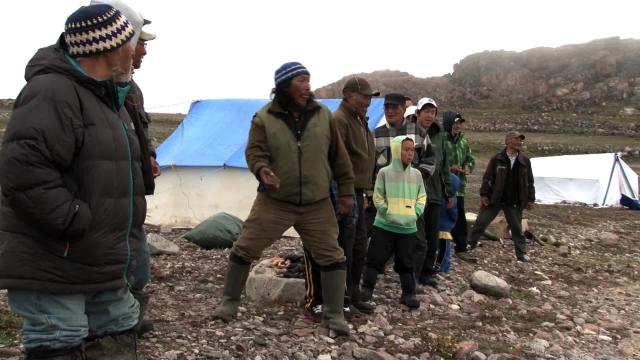
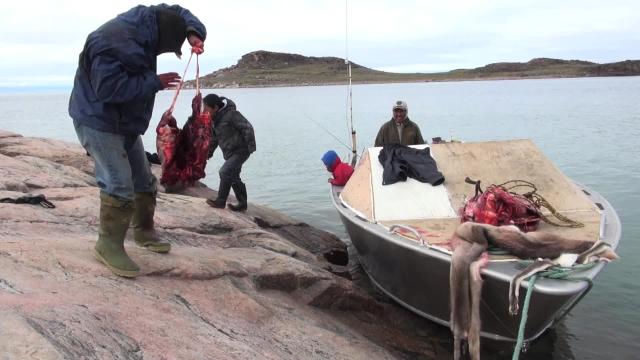
Mauro has spent over a decade living with Inuit communities in the Canadian Arctic, hunting and eating country foods, and learning to speak Inuktitut. His ongoing research in the Arctic, Atlantic and Prairie regions of Canada endeavours to help us better listen to the language of the land, and offer the world strategies for healthy human interaction with the biosphere.
Dr. Mauro can be contacted at: i.mauro@uwinnipeg.caSee more
In 2012, the National Council of Aboriginal Midwives was invited into five Aboriginal communites that expressed interest in bringing birth services closer to home.
In 2012, the National Aborignal Council of Midwives travelled to five communities across Canada. Each community developed their own vision for materntity care services and the return of birth to their land.
In 2012, the National Aborignal Council of Midwives was invited into five communities across Canada to speak about birth, past and present, the return of birth and what that would mean to Aboringal cultures, health, and nationhood.
Ian Mauro is a forthcoming Canada Research Chair in "human dimensions of environmental change" at Mount Allison University, in New Brunswick. He is both a researcher and filmmaker, with a PhD in environmental science, and his work focuses on hunter, farmer and fisher knowledge regarding environmental change, specifically issues related to food security and global warming.… Read more
Book screenings, rent or buy copies of Inuit Knowledge and Climate Change from our distributor Vtape. Contact Wanda at +1.416.351.1317 or email wandav@vtape.org.
Inuit Knowledge and Climate Change had its world premiere October 23, 2010, at the imagineNATIVE Film + Media Arts Festival in Toronto. The complete film also streamed online simultaneously watched by more than 1500 viewers around the world. Following the film, a Q&A with filmmakers Zacharias Kunuk and Dr.… Read more
Additional Voices on Inuit Knowledge and Climate Change are being uploaded every day to the channel http://www.isuma.tv/ikcc/voices. Some in Inuktitut, others in English.
More discussion about Inuit Knowledge and Climate Change, other related human rights issues, see also IKCC at www.isuma.tv/ikcc
The National Aboriginal Council of Midwives exists to promote excellence in reproductive health care for Inuit, First Nations, and Métis women. We advocate for the restoration of midwifery education, the provision of midwifery services, and choice of birthplace for all Aboriginal communities consistent with the U.N. Declaration on the Rights of Indigenous Peoples.… Read more
The Arctic is warming double the global average, decreasing sea ice, making it easier to access and extract mineral and oil resources from the region, and this cumulative climatic and economic change has significant human and environmental health implications for Inuit and their communities.… Read more
Full story at baffinlandwitness.com. Last Tuesday, QIA negotiator Paul Quassa spoke over Igloolik community radio to summarize the 24-article Inuit Impact and Benefit Agreement (IIBA) offer the association made to Baffinland earlier this month.… Read more
Full story at baffinlandwitness.com. BW: You’ve been mayor of Igloolik since January. Can you tell me a little bit about your background? NA: My real profession is interpreter-translator—I had a private business as an interpreter-translator in Iqaluit—but I’ve been many things.… Read more
Frances Abele discusses how NIRB will make a decision to recommend a decision as to whether the Mary River Project will proceed or not and what the terms will be.
Frances Abele answers the question: what are some of the challenges with relying on, for example, the environmental impact statement from a proponent or a mining company for information about impacts and then also in order to monitor changes over time and in the future?
Frances Abele answers the question: Could you comment on the importance of research and data to support these panels and boards like NIRB in making good decisions on projects like Mary River?
Frances Abele answers the question: Why are baseline studies important for assessing the impacts of major resource development projects like Baffin Land’s Mary River Project?
Rhoda Katsak answers the question (in English and Inuktitut): Is there anything else you would like listeners to know about the socio-economic monitoring committees?
Rhoda Katsak answers the question (in English and Inuktitut): The socio-economic monitoring committees send a report to NIRB - how do the socio-economic monitoring committees fit within the bigger picture of monitoring and assessment in Nunavut?
Rhoda Katsak answers the question (in English and Inuktitut): Do the socio-economic monitoring committee members – like the mayor or the council members that sit on the committee- report back to their communities about what was said at their meetings?
Rhoda Katsak answers this question (in English): Do the committees members decide which indicators are important to measure? In other words, how do the socio-economic monitoring committee decide what relevant information they want to know about communities? How do they decide what information is important to communities?
Rhoda Katsak answers this question (in English and Inuktitut): What the socio-economic monitoring committees are; who the members are and how the committees work?
ᓂᐲᑦ ᐃᓄᒃᑎᑐᑦ QIA and Mary River IIBA Part 3, June 27, 2012, 177:11, live call-in about Baffinland Mary River Impact and Benefits Agreement (IIBA) and QIA negotiations, with QIA President Okalik Eegeesiak, Mary River Project Coordinator Solomon Awa, Baffinland Working Committee member Solomon Mikki and QIA Igloolik Board Member Zacharias Kunuk.