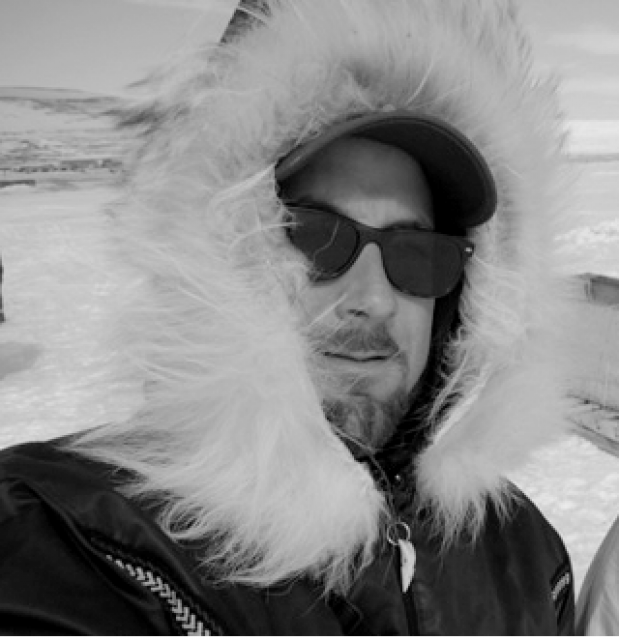
Dr. Ian Mauro is an Associate Professor in the Department of Geography at the University of Winnipeg. He holds a BSc in Environmental Science and PhD in Geography, from University of Manitoba, and was a SSHRC Postdoctoral fellow in Ethnoecology at the University of Victoria. He previously held a Canada Research Chair in Human Dimensions of Environmental Change at Mount Allison University.
As both a community-based researcher and filmmaker, Mauro works at the interface between the social and ecological sciences, and is a pioneer of multi-media methodologies, scholarship and education. He uses participatory video to collect, communicate and conserve local and indigenous knowledge, an approach that allows people who live on the land to tell their own stories, in their own language, and within the landscapes where their knowledge has been generated. He was awarded an “Apple Distinguished Educator” award for his approach in 2011.
His films - focused on genetically modified crops, sustainable agriculture and climate change - have been translated into numerous languages and screened globally at academic conferences, film festivals and venues such as the United Nations, Smithsonian Institution, National Geographic and the Royal Ontario Museum. He co-directed the influential Inuktitut language documentary Qapirangajuq: Inuit Knowledge and Climate Change (www.isuma.tv/ikcc) with acclaimed Inuk filmmaker Zacharias Kunuk and they continue to collaborate on a project focused on industrial development in the Canadian Arctic. Mauro’s most recent research documentary, Climate Change in Atlantic Canada (www.climatechangeatlantic.com), was toured across the region with Dr. David Suzuki.
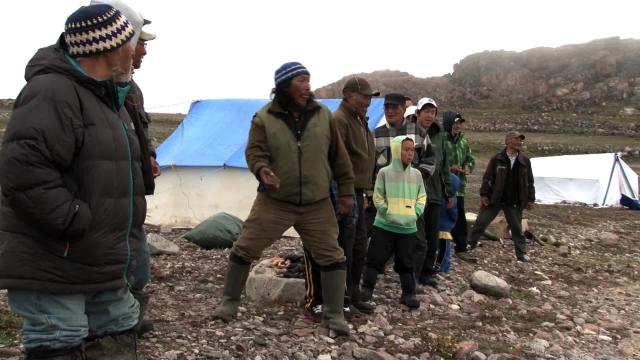
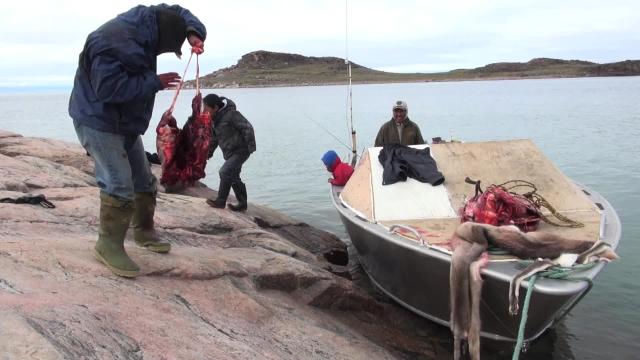
Mauro has spent over a decade living with Inuit communities in the Canadian Arctic, hunting and eating country foods, and learning to speak Inuktitut. His ongoing research in the Arctic, Atlantic and Prairie regions of Canada endeavours to help us better listen to the language of the land, and offer the world strategies for healthy human interaction with the biosphere.
Dr. Mauro can be contacted at: i.mauro@uwinnipeg.caSee more
In 2012, the National Council of Aboriginal Midwives was invited into five Aboriginal communites that expressed interest in bringing birth services closer to home.
In 2012, the National Aborignal Council of Midwives travelled to five communities across Canada. Each community developed their own vision for materntity care services and the return of birth to their land.
In 2012, the National Aborignal Council of Midwives was invited into five communities across Canada to speak about birth, past and present, the return of birth and what that would mean to Aboringal cultures, health, and nationhood.
Ian Mauro is a forthcoming Canada Research Chair in "human dimensions of environmental change" at Mount Allison University, in New Brunswick. He is both a researcher and filmmaker, with a PhD in environmental science, and his work focuses on hunter, farmer and fisher knowledge regarding environmental change, specifically issues related to food security and global warming.… En savoir plus
Book screenings, rent or buy copies of Inuit Knowledge and Climate Change from our distributor Vtape. Contact Wanda at +1.416.351.1317 or email wandav@vtape.org.
Inuit Knowledge and Climate Change had its world premiere October 23, 2010, at the imagineNATIVE Film + Media Arts Festival in Toronto. The complete film also streamed online simultaneously watched by more than 1500 viewers around the world. Following the film, a Q&A with filmmakers Zacharias Kunuk and Dr.… En savoir plus
Additional Voices on Inuit Knowledge and Climate Change are being uploaded every day to the channel http://www.isuma.tv/ikcc/voices. Some in Inuktitut, others in English.
More discussion about Inuit Knowledge and Climate Change, other related human rights issues, see also IKCC at www.isuma.tv/ikcc
The National Aboriginal Council of Midwives exists to promote excellence in reproductive health care for Inuit, First Nations, and Métis women. We advocate for the restoration of midwifery education, the provision of midwifery services, and choice of birthplace for all Aboriginal communities consistent with the U.N. Declaration on the Rights of Indigenous Peoples.… En savoir plus
The Arctic is warming double the global average, decreasing sea ice, making it easier to access and extract mineral and oil resources from the region, and this cumulative climatic and economic change has significant human and environmental health implications for Inuit and their communities.… En savoir plus
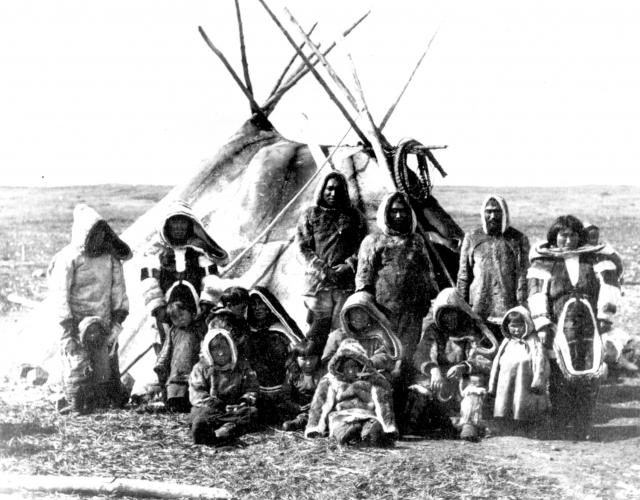
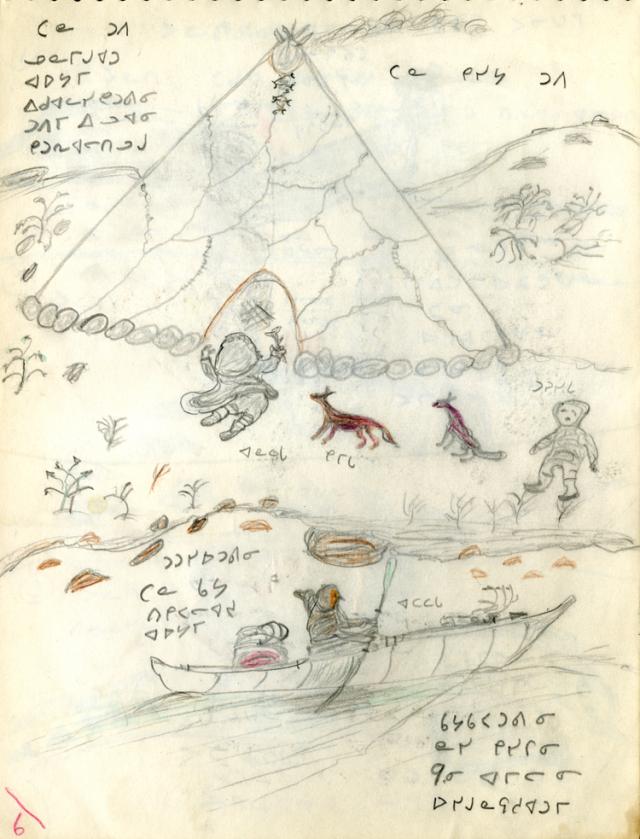
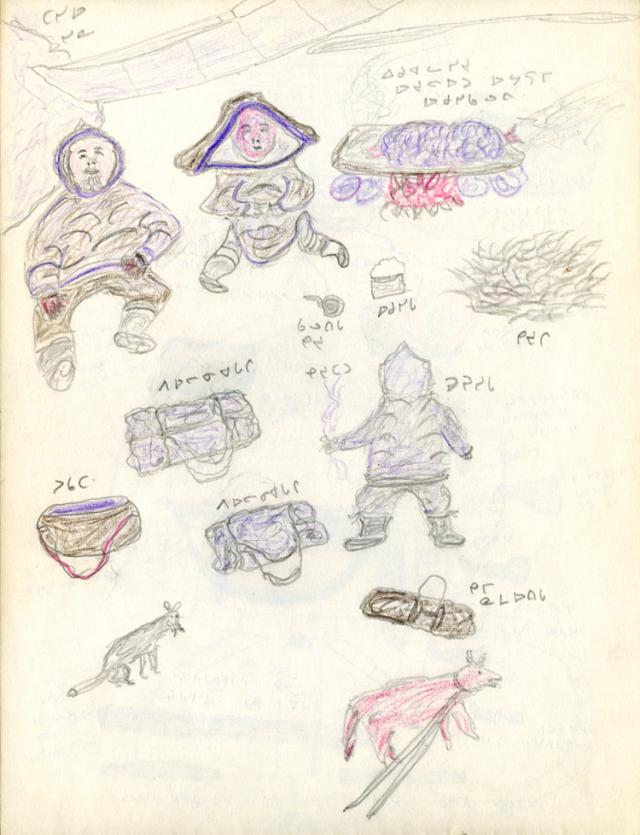
Cette tente était loin à l'intérieur des terres, l'été. Ils faisaient du feu à l'intérieur de la tente à cause des moustiques. Une tente en peau de phoque. La mère, le chien, le garçon à la chasse au caribou. Arrivée du qajaq en été. Le père. Les Inuit avaient des qajait en peau de phoque. Il y avait 9 peaux de phoques. Le qajaq était assez gros pour transporter des charges.
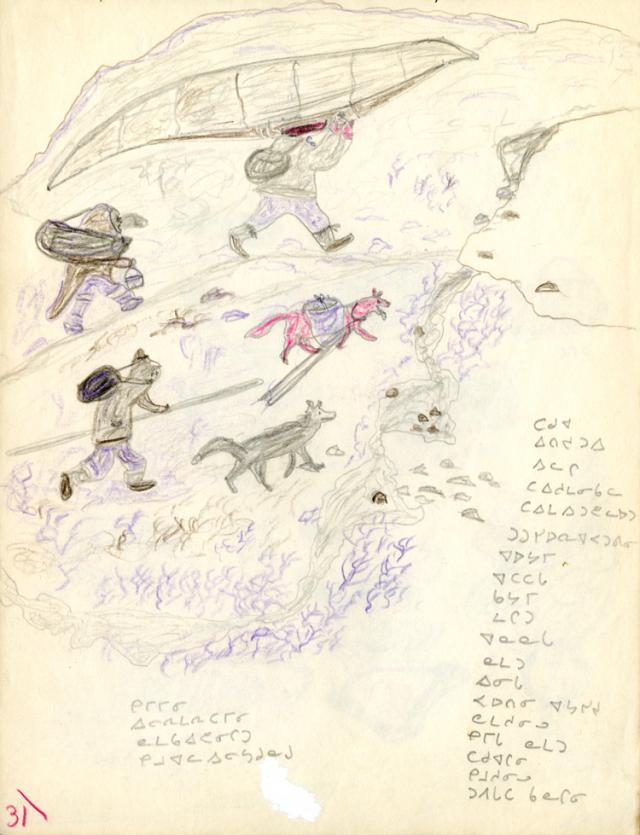
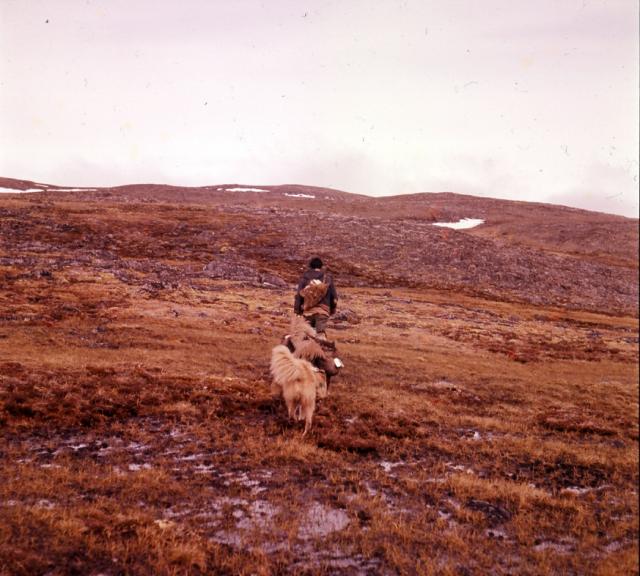
Cette famille traverse la péninsule. Ils faisaient ce voyage autrefois. Ils allaient chasser le caribou pendant l'été. Le père transporte son qajaq. La mère transporte des charges sur son dos. Leur fils porte les pagaies du qajaq. Le chien transporte aussi des charges. Il tire les provisions et les mâts de la tente.… En savoir plus
Voici une plage, sur un lac. Ils font un feu et font bouiller la viande dans un ukkusik (marmite de pierre). Tasse en bois, seau, bois de chauffage. Leurs possessions. Le garçon ramasse du bois. Sac en peau de phoque, leurs affaires, le sac de transport du chien Simeonie Weetaluktuk E9-1752, Inukjuak
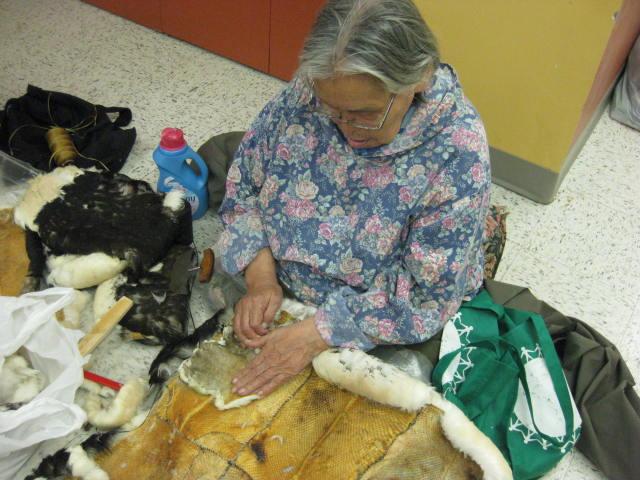
Étapes de la couture d'un atigi en peau de canard eider. Artisanes: Elisapi Inukpuk et Elisapi Nutaraq, accompagnées de Rhoda Kokiapik et Nancy Palliser. Inukjuak, 2013 Photo: Nancy Palliser, Institut culturel Avataq.
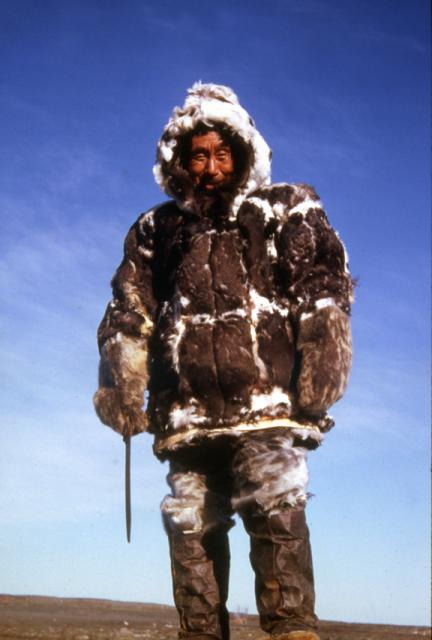
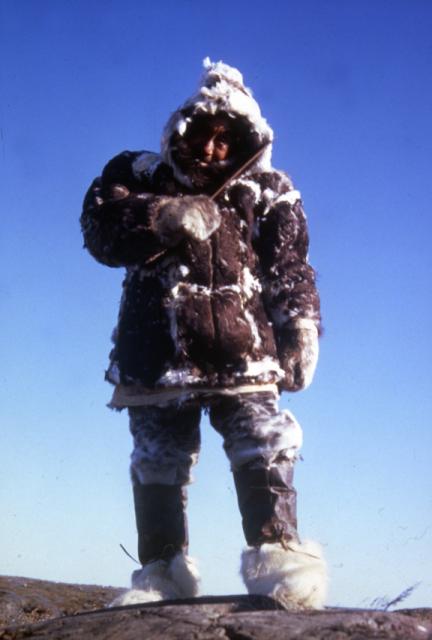
Qikirtait (Belcher Islands) 1971 Vue de dos, homme portant un atigi en peau de canard eider Bernard Saladin d'Anglure Bernard Saladin d'Anglure fonds/Avataq Cultural Institute/BSA-164
Qikirtait (Belcher Islands) 1971 Vue de devant, homme portant un atigi en peau de canard eider Bernard Saladin d'Anglure Bernard Saladin d'Anglure fonds/Avataq Cultural Institute/BSA-163